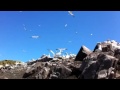
Lots of people that come to the Alpine Birds blog from google are - quite obviously - looking for info on Alpine Birds. And I love to talk about the places I love going birding. So I would like to try get a new blog series going about great birding spots in the Alps - well, at the the places that I like to go looking for birds, or just to appreciate nature. Here is the second one in the series:


View Adolf Pichler Hütte / Kemater Alm in a larger map
Adolf Pichler Hütte / Kemater Alm

These two mountain huts lie just southwest of Innsbruck, but deep enough in the mountains to feel well away from civilization. Surrounded by stunning hills and the towering Kalkkögel Mountains, this quiet valley is a snow hole in winter and a lush green paradise in summer.
Summer time birding:
Entering the Senderstal (Sender Valley) from Grinzens (see map directions to birding spot here), you will need to buy a parking ticket at the machine at the entrance to the valley, just outside of town (€3, there is also a boom gate there). Have a look around in this area for Treecreeper, as well as Nuthatch and Crested Tit. Continue driving slowly up the valley road, following the little stream. On your way up through the forest, keep a look out for Three-toed Woodpeckers. They can be very shy, so it may take stopping the car for a bit and having a good (quiet) look about. The best place to do this is probably at the open parking area about half way up the valley (where you can leave your car parked for a bit and explore the forests). If you are lucky you may pick up a Greyheaded Woodpecker, a black grouse or a capercaille (but no guarantees on any of those!)
The drive up the valley follows the stream so you really want to find the local White-throated Dipper pair, and maybe a Grey Wagtail.

Kemater Alm and the stunning Kalkkögel Mountains
When you get to Kemater Alm (basically the first buildings you reach), you will need to park your car. You are now at 1646m (5400ft) above sea level. Take the trail along a gravel road (signposted to Adolf Pichler Hütte), heading straight for the stunning Kalkkögel Mountains. As you leave the farmhouse area, keep an ear and eye open for Willow Tits - they can be very abundant in the scrubby vegetation and sparce trees, particularly just south of the gravel road, and along the next 1 kilometer of road up towards the hut.
As you wander through the open alpine grasslands, look for the Water Pipit and groups of Alpine Accentors and Black Redstarts in the boulder-strewn areas.
As you get slightly higher up, scan the steeper rough ground for Whitewinged Snowfinch (they breed higher up but you have a decent chance of seeing them if you look really hard), and the cliffs for Wallcreeper. Always keep an eye in the sky and you might be treated with a Golden Eagle.

Field of Mountain Pine and open high alpine birding areas
Especially at migration time, the large areas of shrubby Mountain Pine (Latschenkiefer, Pinus mugo mugo) can be filled with life and one never knows what could be moving through. One day I will find a Siberian Warbler there!
The spotted nutcrackers are likely to be a permanent (or at least frequent) sound on your walk up. They typically spend alot of time in the Arolla Pines (Zirbelkiefer, Pinus cembra) - gnarly old trees that mostly grow right up between the forest and tree line.

An Arolla Pine, aka Spotted Nutcracker food!
When you get to Adolf Pichler Hütte, stop for a refreshing "Radler" (a beer shandy of Sprite mixed with beer) and some Kasknödel, eaten in a soup, with salad or Sauerkraut (a traditional cheese dumpling). Soak in that awesome view and enjoy!


After a bite to eat, head further up the hill, toward the ridge-line saddle behind the hut. At this point the path takes you down the other side back towards Kemater Alm (and you car), but what it is also wonderful to take a little stroll out along the ridge to the north. The view is stunning and well worth the 5minutes of extra effort ;-)

The lookout point at the end of the ridge
Note: if you do go out along the ridge line, you will need to back track to get back to the saddle and go down along the path to the west - you will not be able to get down directly from the ridge to Kematen Alm.
The path now takes you north along the western side of the little ridge. There is more vegetation here than on the trail up to Adolf Pichler Hütte, so your chances of picking up tits (especially Willow Tit) are rather high.
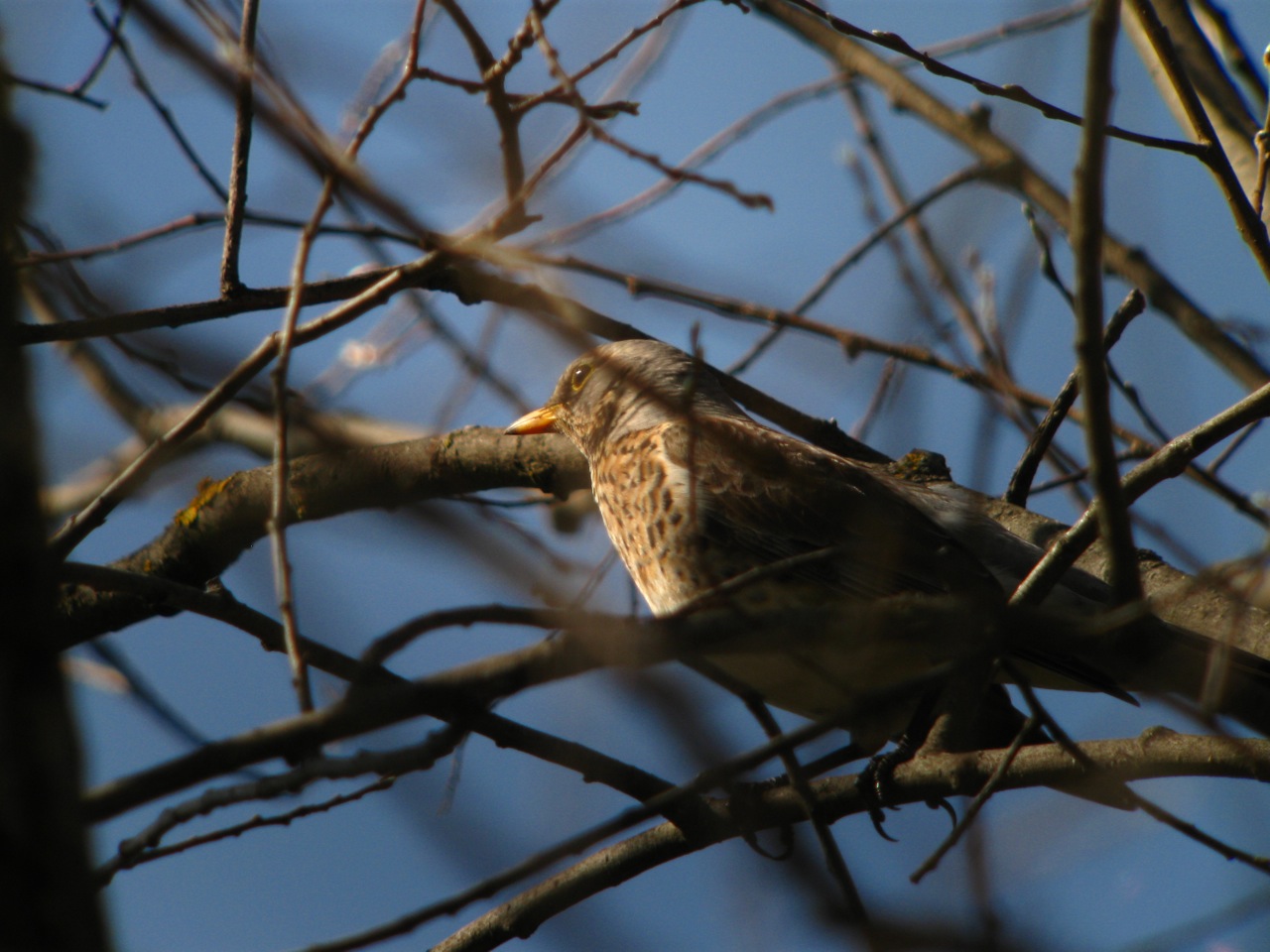
This valley appears to be an important migration path for Pipit, Fieldfares and other thrushes and at times there can be very large numbers moving through (esp. in on the autumn migration).
Winter time birding:
Park your car down in Grinzens and walk the road up the valley. The normal road becomes a Rodelbahn (sledding track) in wintertime, so you will not need any special equipment to go birding here in winter - just warm shoes and clothing.
As you wander up the road, keep a decent pace and listen out for bird parties. The tits in particular can be very vocal in winter and so the best way to find any birds at all is to simple try to find the tits. Once you have located some tits calling, scan every tree in the area for anything else. In the snowy forests, the birds form mixed species bird parties. These can be large and they are evidently very popular with our feathered friends because it is seldom that one sees too many birds outside one of these mixed species flocks. Favorite wintertime party participants include:
nuthatch (Kleiber)
crested tit (Haubenmeise), coal tit (Tannenmeise), great tit (Kohlmeise)
short-toed treecreeper (Gartenbaumläufer), eurasian treecreeper (Waldbaumläufer)
great spotted woodpecker (Buntspecht), three-toed woodpecker (Dreizehenspecht)
chaffinch (Buchfink)
robin (Rotkehlchen)
blackbird (Amsel)
the other rather vocal group are the Common Crossbills (Fichten-Kreuzschnabel) - they form large, noisy groups in winter and the males go bright red. they tend not to be as mobile or nomadic as in the rest of the year, as they oftentimes breed in winter (when the Spruce seeds ripen).

If you make it to Kemater Alm, have something warm to eat and drink and then head out behind the Alm towards Adolf Pichler Hütte (closed in winter) - you might pick up a Rock Ptarmigan or Whitewinged Snowfinch out on the snow fields. If you are thinking about going in to this area (especially in late winter/spring when both species are getting ready to breed), then first ask someone at the Kemater Alm about the avalanche risk. Snow Finches are wonderful, but not worth uncalculated risks.
Best time to go: Autumn (the colours are great)
Interesting bird species: White-throated Dipper, Spotted Nutcracker, Three-toed Woodpecker,Alpine Accentor, White-winged Snowfinch, Willow Tit, Golden Eagle.
How to get there: go to the google map, click on the first P(arking) symbol and say "to here". type in your starting location and google maps will do it all for you. Grinzens is approximately 20 minutes from the center of Innsbruck.
View Adolf Pichler Hütte / Kemater Alm in a larger map
Happy birding,
Dale Forbes



















.jpg)


.jpg)