While I love this blog, I now pretty much only write on my other two blogs: BirdingBlogs.com and 10,000 Birds - I would love to see you there!
Showing posts with label Redcrested Pochard. Show all posts

Wednesday, 2 July 2008

Digibinning, Diginocking or simply BAD photography

A few weeks ago, I asked a question on birdforum.net about what people call taking photos through a pair of binoculars (kinda like digiscoping's little sister ;-). I was calling it diginocking. I liked the silliness of the name and it added a bit of lightness to my attempts at taking photos (and videos!) through my binnies.

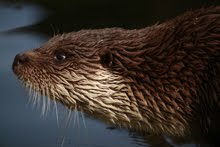
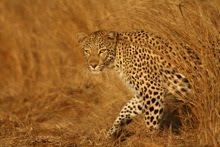
Last year we visited Kruger National Park in South Africa (amongst other lovely places there), and I managed to get some half decent leopard, black rhino and elephant photos through my SLCs but I always struggled to align the camera lens with the binoculars. Most of the time I managed to avoid too much vignetting but I still often got a washed-out blue haze over many of the photos. I continued to practice and got my best results with some friendly ducks in Lago di Garda a few months ago.


Then last Saturday, I went out with the guys from Natopia and Tirol Werbung (related to a project they are doing with Swarovski Optik called Nature Watch) and got to play about with their quick-shot adapter. I had heard a bit about it but I never expected anything near the results I got.
I had sooo much fun!

The little plastic job fit on to the top of my bins and held our little camera in place quite nicely. I am not the biggest fan of our camera (Casio ex-z110) but still I was quite happy with the results.


I took some lovely photos of Luke Pfeiffer through my ELs: a beautiful young man with a sharp mind hiding behind deep eyes (I'll just wait for his folks' permission before posting them here).

It seems that most people on bird forum call this digibinning but my absolute favorite was BAD photography - Binocular Assisted Digital Photography. Gotta love that!


Here are a few other photos from the day:


Happy birding
Dale

Wednesday, 7 May 2008

More photos from Lago di Garda, Italy

I wanted to add a few more bird (birding and other) photos from our trip to Lago di Garda, northern Italy.
This is a shot taken one dawn from one of the beaches near Manerba dei Garda, looking towards the cliffs of La Rocca (where I did most of my birding).

Looking out over the ocean. There were a good few pairs of Yellowlegged Gulls flying about, as well as common swifts and alpine swifts, crag martins and barn swallows. Sardinian warblers were calling in the background.


Two more shots of the incredibly cute redcrested pochards that were hanging about the port at San Francisco de Garda (all taken through my binoculars).


And a reed warbler singing away in the reed bed near the point at San Biaggio. There were about 30 singing there in this tiny little reed bed. A couple of little sedge warblers were also hanging out between them, but were completely silent and tended to be lower in the reeds, feeding right near water level. But, they were also more likely to use the non-reed material for perching, i.e. the sticks and fallen branches that lay about.

Monday, 5 May 2008

There is more to see in Italy than Sparrows...

There are also Blackbirds. Before heading down to Lago di Garda last weekend, I had a look around the net to see what there was about birding in northern Italy. And the sparrow comment came from somewhere there. In fact, I ended up seeing a good few species of bird over the weekend. Birder's paradise it was not, but there was certainly lots of fun to be had. We chose a campsite near the little forest patch (La Rocca) between Manerba and Moniga, on the southwestern part of the lake. GoogleEarth seemed to suggest that, while being a fairly built-up area, there seemed to be at least some natural vegetation in which I could find something interesting.

As soon as we got there, I was off with my binnies to see what I could see. Tons of Blackheaded Gulls (Larus ridibundus Lachmöwe) feeding and relaxing just off shore, with a few of the much larger Yellowlegged Gulls (Larus michahellis Mittelmeermöwe) hanging around. Not a single wader running along the pebbled shore, but a single pair of Dabchick (Little Grebe) and a couple of Great Crested Grebe pairs certainly made up for that.

I eagerly headed over to the forest. But it seemed like the only birds I saw were these annoyingly fleeting glimpses of fleeing birds. It seems that centuries of hunting birds (even the littlest of passerines) has left them with a well-developed fear of humans and I had to become very creative just to get a look at a bird through my binoculars (as a side note, I found six different shot gun cartridges in the forest). Eventually I learnt to sneak quietly through the forest and look for birds in the distance, and through gaps in the trees. If I saw them early enough then I generally got a decent look. At this stage you might be wondering why I did not just listen to them and identify them by call. I wish I were that good (I am trying to learn them though, I promise).

Through stealth and persistence, I managed to find some nice birds. I found the Sardinian Warbler (Sylvia melanocephala Samtkopf-Grasmücke) to be fairly widespread and common, but incredibly shy. A lot shyer than the very vocal Blackcap (Mönchsgrasmücke). The best way to find the Sardinian Warblers (as with all the other warblers) was definitely by call, and in the late afternoon, there were often a good half a dozen singing from the tops of the trees/bushes along La Rocca's higher savanna-like ridges.

The late afternoons were also a good time to look out for the wing feeders. Barn Swallows (Rauchschwalbe) and Crag Martins (Felsenschwalbe) would buzz the open fields and cliff edges, and House Martins (Mehlschwalbe) would feed over village edges. Apparently, the Common Swift (Apus apus Mauersegler) traditionally gets back to Austria on 1 May each year, so I was on the lookout for them. 1 May came and not a single Black Swift (but a good few Alpine Swifts!). But the morning of 2 May, suddenly they were about. A brisk wind was blowing up off of the lake, and lifting up against the lake-side cliffs; much to the delight of the 30-odd common and alpine swifts gathered there. I swear they were playing. So graceful. So incredible.

The mixed scrub, forest and fields, also yielded a few pairs of Nightingales (Nachtigal, click for map), a Pied Flycatcher (Trauerschnäpper, click for map), a Grey Partridge (Rebhuhn), and dramatic vistas across the lake. Walking back through the fringe farmlands, I found a couple of pairs of Hoopoe (Wiedehopf, click for map of 2 locations) and lots of Hooded Crows (Nebelkrähe).

The little reed bed at San Biaggio (here) produced about 30 singing reed warblers (Teichrohrsänger), two sedge warblers (Schilfrohrsänger), a moorhen (Teichrallen) nest and some coots (Blässhuhn). I also picked up a Common Whitethroat (Dorngrasmücke) feeding on some berries in this same area. Whilst walking through the camping areas, also keep a look out for the almost ubiquitous Spotted Flycatchers (Grauschnäpper) and Serins (Girlitz).

I took this photo of a Redcrested Pochard (Kolbenente) on the lake with my little casio digital camera held up to my swarovski SLR binoculars. I am quite happy with the result. Not perfectly sharp, but close.

So, it seems like there is at least something to keep the birder occupied around Lago di Garda. But before you go, brush up on those bird calls, and make sure you take your binoculars!