While I love this blog, I now pretty much only write on my other two blogs: BirdingBlogs.com and 10,000 Birds - I would love to see you there!
Showing posts with label Alpine Accentor. Show all posts

Saturday, 1 May 2010

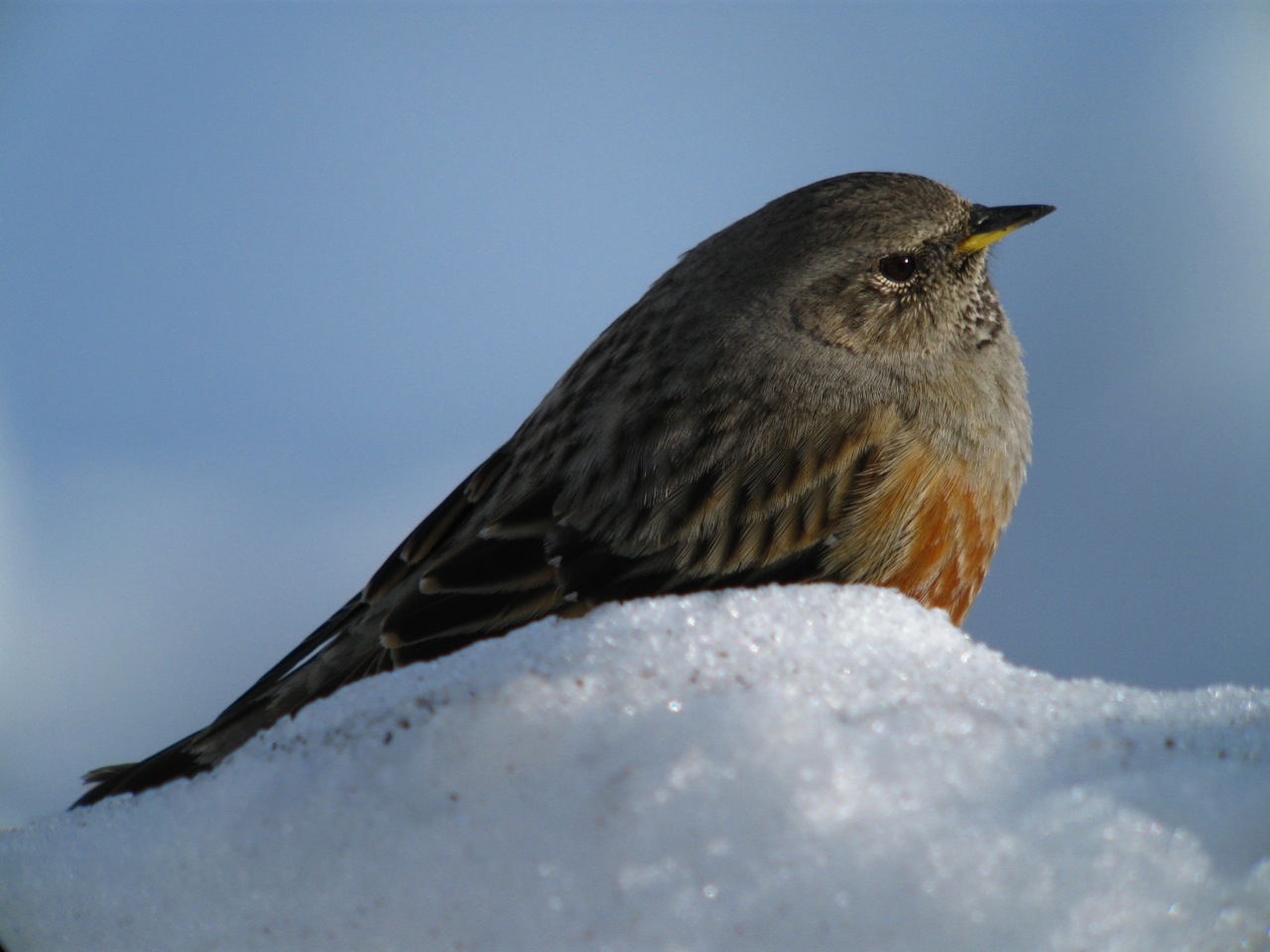
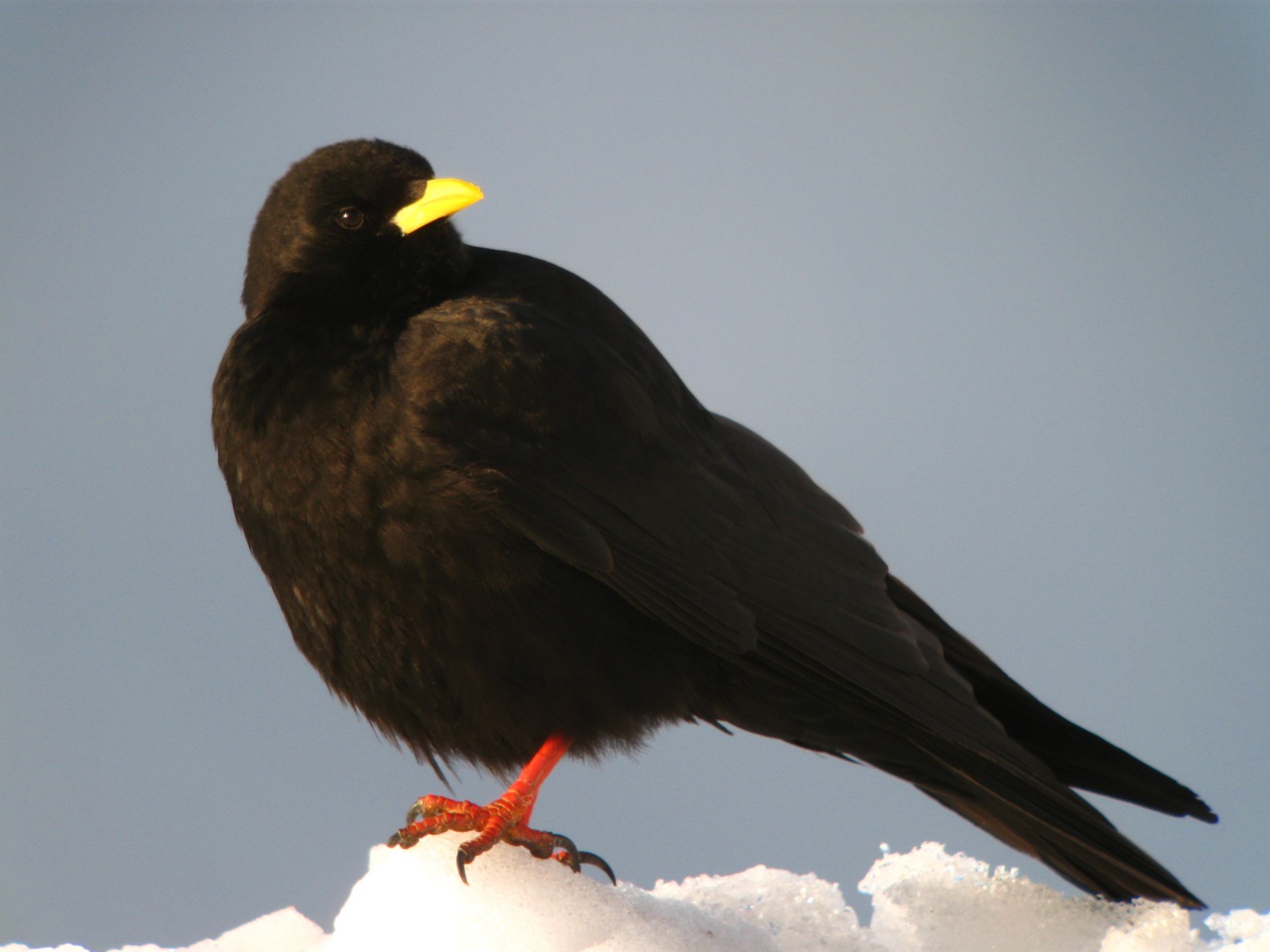
The Alpine Accentor digiscoped

The Alpine Accentor is one of my absolute favorite birds for a good number of reasons. First of all they have a very kooky social arrangement (polygamy involving multiple males and multiple females). They are cute (at least I find them so).


But they also live in some of the most stunning landscape the Alps has to offer. Think Heidi: high up in the mountains, above the treeline. The landscape is a stunning open wilderness, a place I find a spiritual peace hard to emulate elsewhere in here. no cars. no people. just me and the mountains...

Here are some of my favorite images of this wonderful bird:


All photos were taken with a little Canon A590IS point and shoot and a Swarovski Optik spotting scope.

Happy digiscoping,
Dale Forbes

Be sure to check out Eddie Birdfreak's Bird Photography Weekly!


Saturday, 17 October 2009

Alpine Birding Spots 2 - Adolf Pichler Hütte / Kemater Alm


Lots of people that come to the Alpine Birds blog from google are - quite obviously - looking for info on Alpine Birds. And I love to talk about the places I love going birding. So I would like to try get a new blog series going about great birding spots in the Alps - well, at the the places that I like to go looking for birds, or just to appreciate nature. Here is the second one in the series:

Adolf Pichler Hütte / Kemater Alm


These two mountain huts lie just southwest of Innsbruck, but deep enough in the mountains to feel well away from civilization. Surrounded by stunning hills and the towering Kalkkögel Mountains, this quiet valley is a snow hole in winter and a lush green paradise in summer.

Summer time birding:
Entering the Senderstal (Sender Valley) from Grinzens (see map directions to birding spot here), you will need to buy a parking ticket at the machine at the entrance to the valley, just outside of town (€3, there is also a boom gate there). Have a look around in this area for Treecreeper, as well as Nuthatch and Crested Tit. Continue driving slowly up the valley road, following the little stream. On your way up through the forest, keep a look out for Three-toed Woodpeckers. They can be very shy, so it may take stopping the car for a bit and having a good (quiet) look about. The best place to do this is probably at the open parking area about half way up the valley (where you can leave your car parked for a bit and explore the forests). If you are lucky you may pick up a Greyheaded Woodpecker, a black grouse or a capercaille (but no guarantees on any of those!)

The drive up the valley follows the stream so you really want to find the local White-throated Dipper pair, and maybe a Grey Wagtail.


Kemater Alm and the stunning Kalkkögel Mountains

When you get to Kemater Alm (basically the first buildings you reach), you will need to park your car. You are now at 1646m (5400ft) above sea level. Take the trail along a gravel road (signposted to Adolf Pichler Hütte), heading straight for the stunning Kalkkögel Mountains. As you leave the farmhouse area, keep an ear and eye open for Willow Tits - they can be very abundant in the scrubby vegetation and sparce trees, particularly just south of the gravel road, and along the next 1 kilometer of road up towards the hut.

As you wander through the open alpine grasslands, look for the Water Pipit and groups of Alpine Accentors and Black Redstarts in the boulder-strewn areas.

As you get slightly higher up, scan the steeper rough ground for Whitewinged Snowfinch (they breed higher up but you have a decent chance of seeing them if you look really hard), and the cliffs for Wallcreeper. Always keep an eye in the sky and you might be treated with a Golden Eagle.


Field of Mountain Pine and open high alpine birding areas

Especially at migration time, the large areas of shrubby Mountain Pine (Latschenkiefer, Pinus mugo mugo) can be filled with life and one never knows what could be moving through. One day I will find a Siberian Warbler there!

The spotted nutcrackers are likely to be a permanent (or at least frequent) sound on your walk up. They typically spend alot of time in the Arolla Pines (Zirbelkiefer, Pinus cembra) - gnarly old trees that mostly grow right up between the forest and tree line.


An Arolla Pine, aka Spotted Nutcracker food!

When you get to Adolf Pichler Hütte, stop for a refreshing "Radler" (a beer shandy of Sprite mixed with beer) and some Kasknödel, eaten in a soup, with salad or Sauerkraut (a traditional cheese dumpling). Soak in that awesome view and enjoy!


After a bite to eat, head further up the hill, toward the ridge-line saddle behind the hut. At this point the path takes you down the other side back towards Kemater Alm (and you car), but what it is also wonderful to take a little stroll out along the ridge to the north. The view is stunning and well worth the 5minutes of extra effort ;-)


The lookout point at the end of the ridge

Note: if you do go out along the ridge line, you will need to back track to get back to the saddle and go down along the path to the west - you will not be able to get down directly from the ridge to Kematen Alm.

The path now takes you north along the western side of the little ridge. There is more vegetation here than on the trail up to Adolf Pichler Hütte, so your chances of picking up tits (especially Willow Tit) are rather high.

This valley appears to be an important migration path for Pipit, Fieldfares and other thrushes and at times there can be very large numbers moving through (esp. in on the autumn migration).

Winter time birding:

Park your car down in Grinzens and walk the road up the valley. The normal road becomes a Rodelbahn (sledding track) in wintertime, so you will not need any special equipment to go birding here in winter - just warm shoes and clothing.

As you wander up the road, keep a decent pace and listen out for bird parties. The tits in particular can be very vocal in winter and so the best way to find any birds at all is to simple try to find the tits. Once you have located some tits calling, scan every tree in the area for anything else. In the snowy forests, the birds form mixed species bird parties. These can be large and they are evidently very popular with our feathered friends because it is seldom that one sees too many birds outside one of these mixed species flocks. Favorite wintertime party participants include:
nuthatch (Kleiber)
crested tit (Haubenmeise), coal tit (Tannenmeise), great tit (Kohlmeise)
short-toed treecreeper (Gartenbaumläufer), eurasian treecreeper (Waldbaumläufer)
great spotted woodpecker (Buntspecht), three-toed woodpecker (Dreizehenspecht)
chaffinch (Buchfink)
robin (Rotkehlchen)
blackbird (Amsel)

the other rather vocal group are the Common Crossbills (Fichten-Kreuzschnabel) - they form large, noisy groups in winter and the males go bright red. they tend not to be as mobile or nomadic as in the rest of the year, as they oftentimes breed in winter (when the Spruce seeds ripen).


If you make it to Kemater Alm, have something warm to eat and drink and then head out behind the Alm towards Adolf Pichler Hütte (closed in winter) - you might pick up a Rock Ptarmigan or Whitewinged Snowfinch out on the snow fields. If you are thinking about going in to this area (especially in late winter/spring when both species are getting ready to breed), then first ask someone at the Kemater Alm about the avalanche risk. Snow Finches are wonderful, but not worth uncalculated risks.

Best time to go: Autumn (the colours are great)
Interesting bird species: White-throated Dipper, Spotted Nutcracker, Three-toed Woodpecker,Alpine Accentor, White-winged Snowfinch, Willow Tit, Golden Eagle.
How to get there: go to the google map, click on the first P(arking) symbol and say "to here". type in your starting location and google maps will do it all for you. Grinzens is approximately 20 minutes from the center of Innsbruck.


Happy birding,
Dale Forbes

Thursday, 9 April 2009

Some more photos from MoonWatch

Here are some more images from my first three nights doing the MoonWatch night time bird migration surveys.


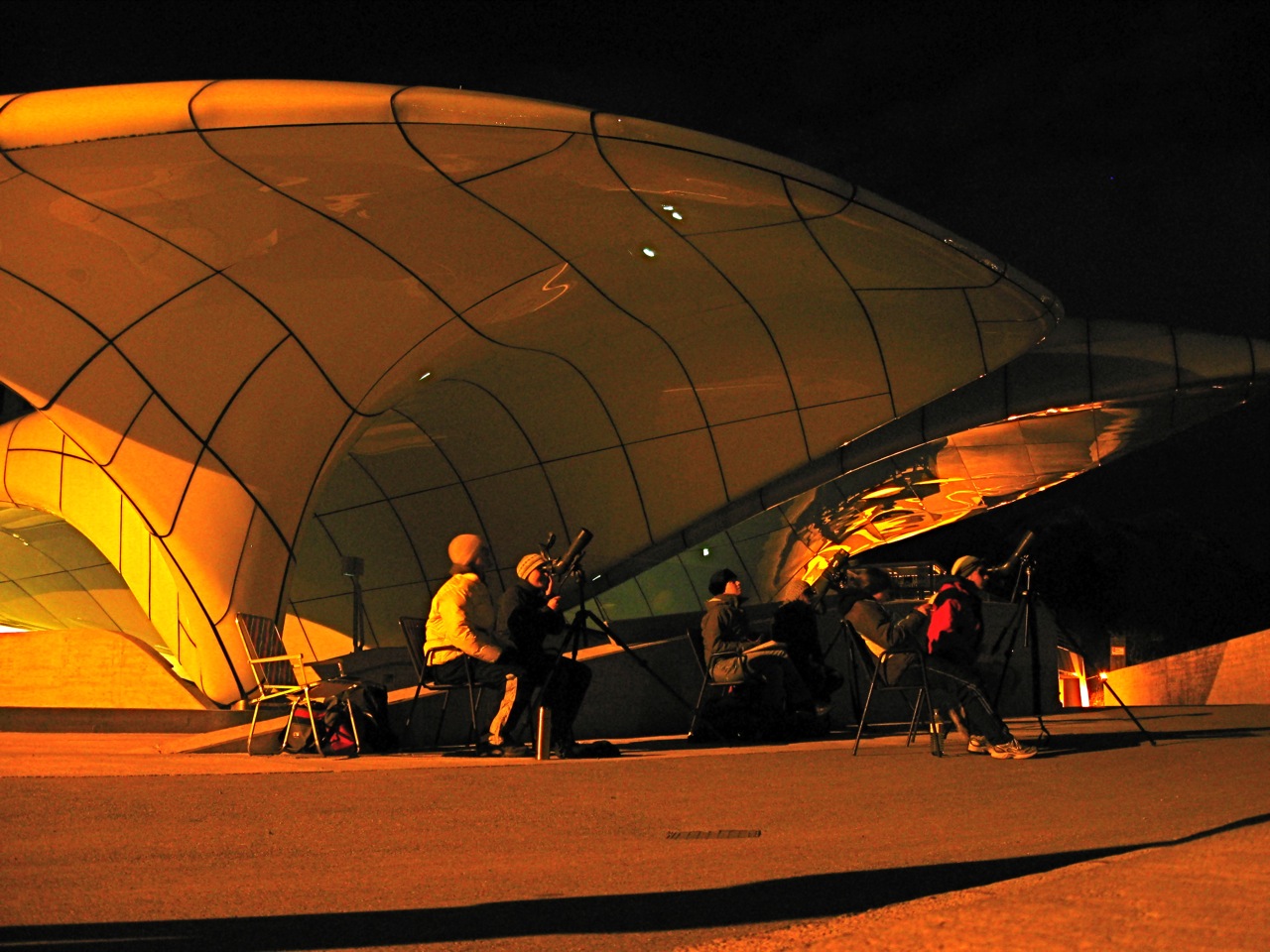
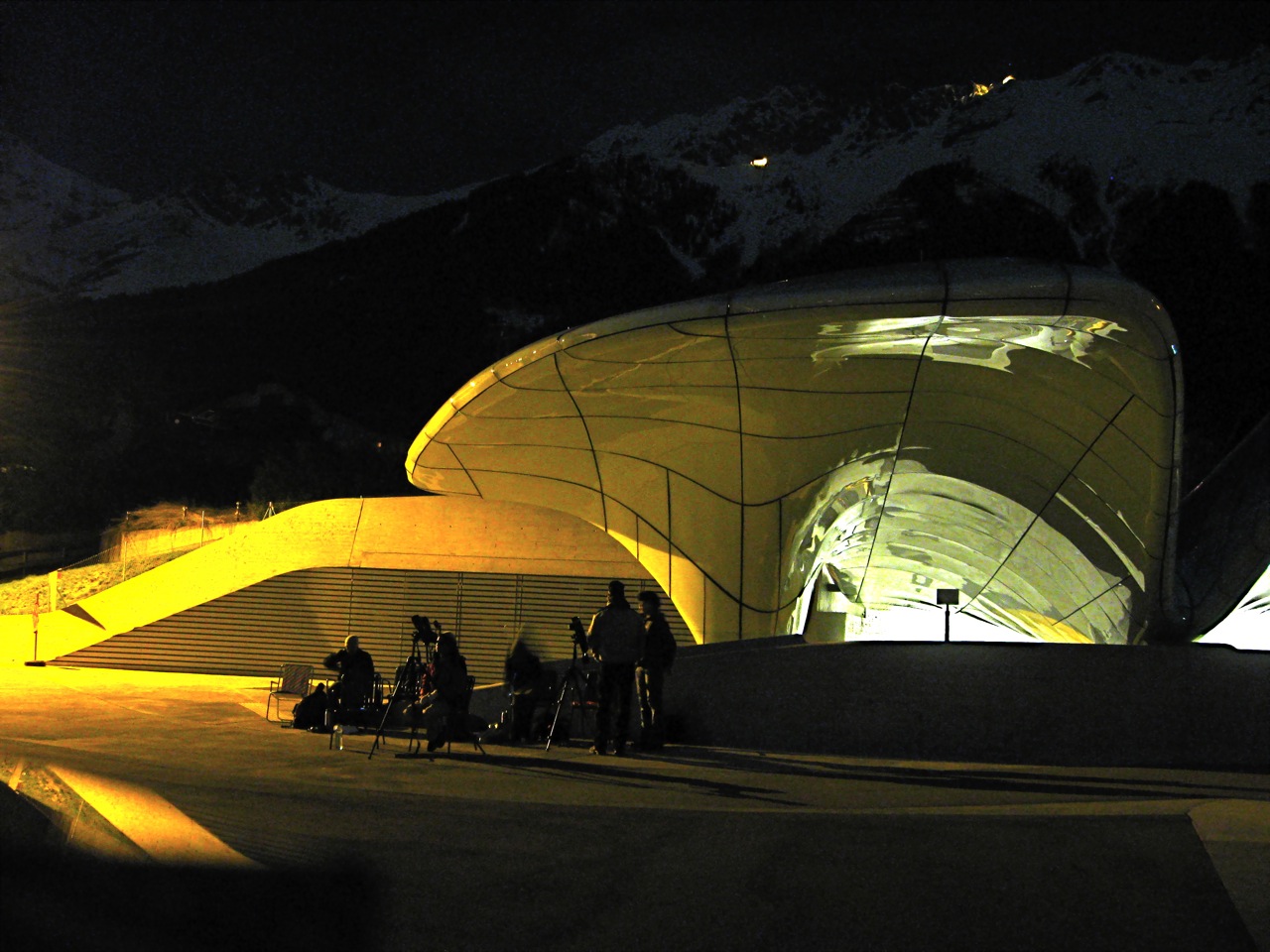
Up at the beautiful Hungerburgbahn train station - our first night out doing the night bird migration study.

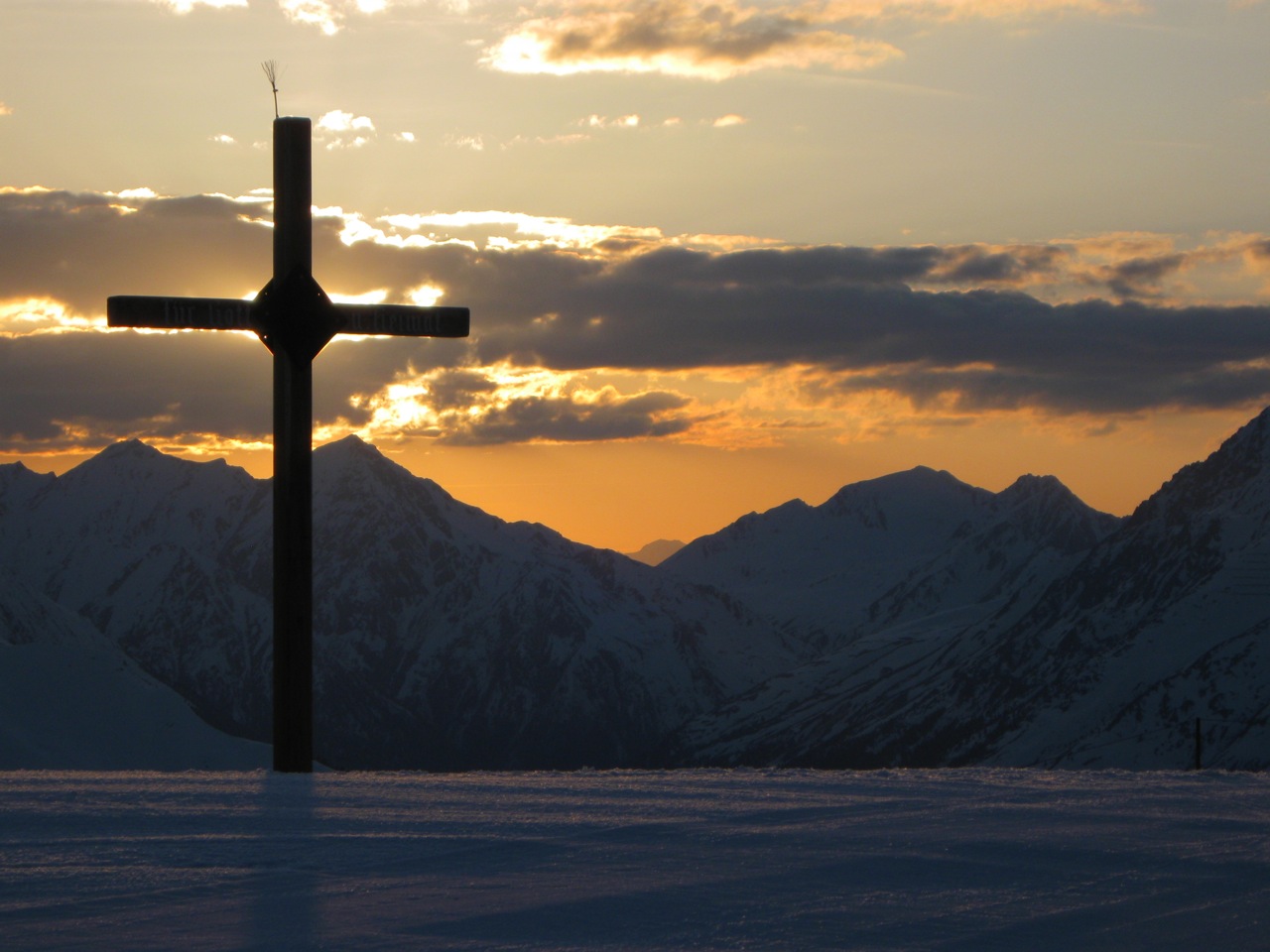
Sunset up at Hoadl Haus (Axamer Lizum, 2350m asl)

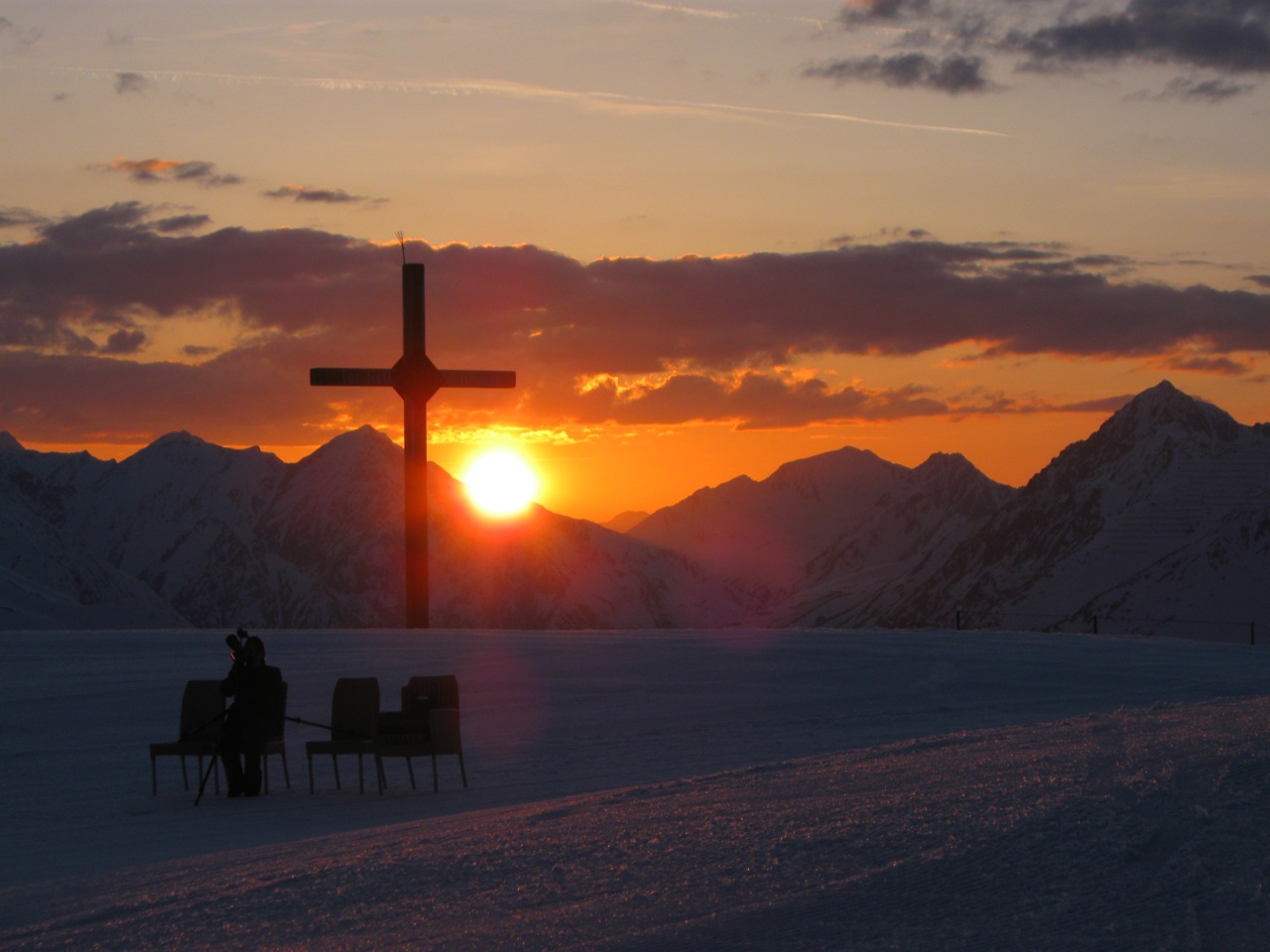
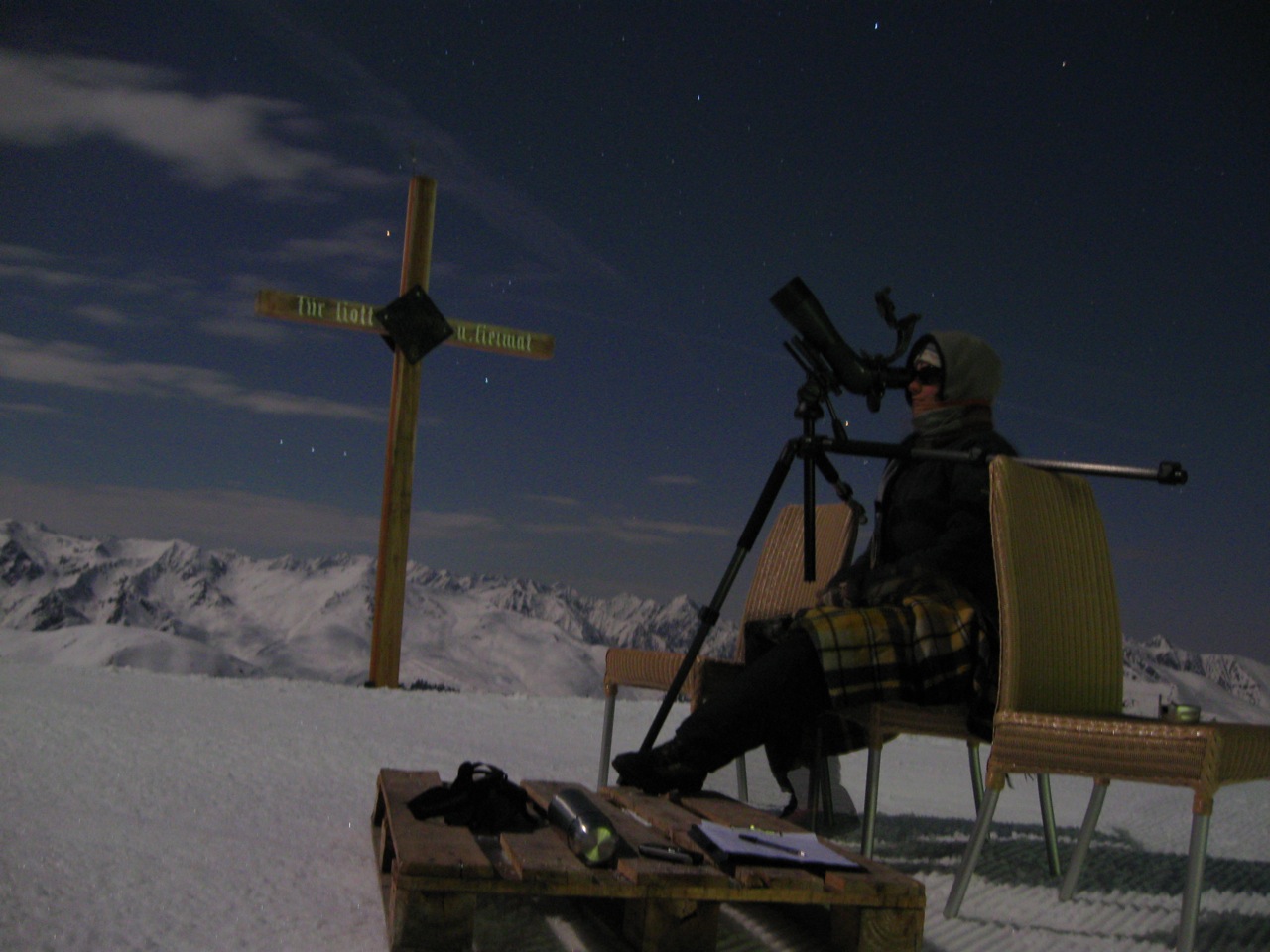
Sunset and our MoonWatch setup, also Hoadl Haus (Axamer Lizum). Almost no birds migrating over the mountain top, but what a stunning location to be at full moon!

The moon rising at Axamer Lizum.

A rather frienly Alpine Accentor up at Seegrube (North Park Ski Arena, overlooking Innsbruck). We saw alpine accentors in the late afternoon at Seegrube, as well as up at Axamer Lizum that morning. Lovely birds.

Seegrube and North Park have got to be one of the most reliable and best spots in the Innsbruck area to see and photograph Alpine Choughs. Between the Alpine Accentors, Alpine Choughs and Black Redstarts, I have lots of birds to play with my digiscoping setup.

I need to leave now to go back up the mountain - another sleepless night staring at the full moon (it really is a fascinating object!)

Happy birding
Dale

Wednesday, 8 April 2009

Birds migrate at night - MoonWatch

Okay so maybe it is a silly title to give a blog post, but maybe you can come up with something better...

The spring migration is in full swing at the moment and it seems lots of bird species migrate at night. Now, this is fairly common knowledge, but what I did not realize is that you can actually see this while it is going on. This week, I have been helping out on a research project investigating migration patters of birds in the Austrian Alps, with this current phase being in the mountains of central Tirol.

So here is what we do: stare at the moon all night and see if anything flies by. Good idea, huh?
Well, I had not thought of it - I just did not expect there to be that many birds flying by your average mountain side for it to be worthwhile sitting out on the snow at 2500m for hours on end, staring down a spotting scope (as much as I do like doing that!). Anyhow, it seems that it can be fairly productive and last night over the course of a few hours we saw almost 40birds fly directly between us and the moon.


Our first go was on Sunday evening (5 April 09), where the participants got to grips with the methodology. The setting, at the Hungerburgbahn overlooking Innsbruck, was stunning and before long, we started to see birds flying past (they looked like pipits to me, but that is just a complete thumb suck).

Monday night, Silvia and I headed up to Axamer Lizum's Hoadl House (2400m asl), where we spent almost the whole night looking out for birds. It was cold. Very cold. But the bright moonlight draping the mountains was spectacular. Interestingly (and disappointing) was that we only saw two birds the whole night.
But the next morning we relished in the streaming spring sunlight and picked up a few of the really cool high-alpine species (4 white-winged snowfinch, a singing alpine accentor, displaying water pipits, and a flock of alpine choughs).


Last night we were up at Seegrube (North Park Ski Arena, overlooking Innsbruck). The first bird I saw as I walked out of the cable-car house was an alpine accentor right in front of me - this was going to be a good night! [for those of you who have not figured this out yet, I looove alpine accentors, they have got to be one of the coolest birds of the high alps, but I will leave my gushing for another time...]. We spent the late afternoon digiscoping accentors and choughs, and enjoying the stillnes of the high mountains, for everyone had left by about 5:30pm, so we had the whole place to ourselves. We started our survey at 9:20pm and carried on through to about 2am, but although it was not as cold as up at Axamer Lizum, we really felt the cold (I suppose lack of sleep will do that to you). But we were compensated by strings of birds flying by, almost all of which seemed to be flying down the Inn valley and my personal guess is that they we were seeing them flying at about 3000m asl. The birds we saw were mostly smaller passerine-sized birds, but I did see a group of 4 ducks fling close together - the quick wingbeats and size makes me think they were Teal (although I suppose they could have been Garganey, but that would be much less likely in the Alps).

What fascinates me most about this whole project is the sheer numbers of birds that must be migrating. We are looking at the moon through a telescope (25x magnification), and the moon occupies a relatively tiny portion of the night sky, so the chance that the flight path of a little bird taking it directly between us and the moon seem rather slight. Given the [relatively] large number of birds we saw last night and on Sunday at Hungerburg, I can only imagine that there really are huge numbers of birds migrating through this area - something that had not really occured to me. Certainly, the number of birds that I am seeing in my everyday life (and birding) in Tirol did not really indicate to me that the migration was in full swing. I suppose what is happening is that a good number of the migrant birds I am seeing every day are continuing on their journeys at night, and are replaced by other for the next day's shift. Either that or, the migrant we were seing at night are hopping over the Alps in one night without a lay-over in the Innsbruck area...

Insight anyone?

Happy birding
Dale

Sunday, 22 March 2009

Aren't Birds Brilliant! - Birding with BirdLife

Last week, BirdLife employees from all over Europe had a meeting in Absam to workshop, learn and discuss the Aren't Birds Brilliant programme. For those of you who don't know what this BirdLife programme is all about, it is essentially about encouraging regular people to come out to particular natural history spectacles and experience some of the wonder and beauty that fascinates us as birders - it is about sharing our passion and love for all sorts of experiences Mother Nature has blessed us with.

Marco Brodde (DOF Denmark) photographing Alpine Chough

Anyhow, it is with this wonderful bunch of people that I got to spend Saturday with, showing them just how brilliant birding in the Alps of Tirol can be.

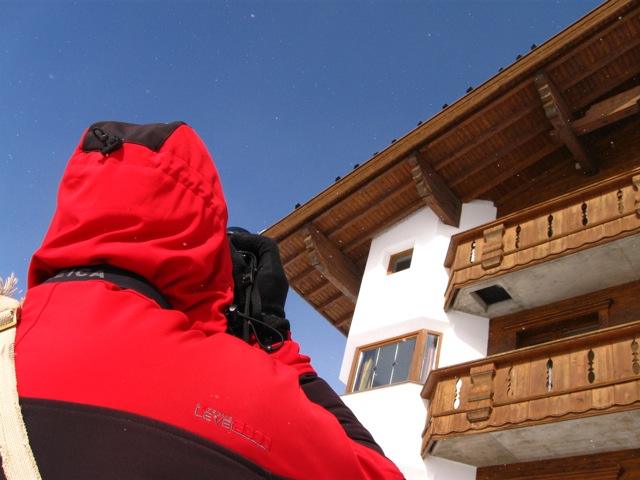
Our first stop was Kühtai. 2020m above sea level and 1.5m of snow. A real Alpine winter wonderland. But boy was it cold - about 10 degrees below freezing, with a biting breeze. But the escapade in to the mountains paid off quickly with a glimpse of a couple of Alpine Chough disappearing over the rooftops. Fairly quickly, we heard an Alpine Accentor singing from a balcony, affording us wonderful views. As we were watching the Alpine Accentor, a flock of Alpine Chough treated us by alighting on the rooftop.

Ken Smith (RSPB, UK) on the lookout...

Digiscoping Alpine Choughs in Kühtai

Digiscoping the singing Alpine Accentor in Kühtai

Heading off further in to town, we caught fleeting glimpses of the White-winged Snowfinches heading back to the area where they are fed with sunflower seeds. Getting back there, we managed to get incredibly views of a small flock of snowfinches feeding on the ground. It was great to get such a lovely look at such an beautiful and enigmatic Alpine bird species. The fact that 90+% of the birds had dark, black bills, and that there were only about 30 snowfinches about desipite the early hour and the light snow, suggests that they really have moved off to their high mountain territory areas.

Orbán Zoltán (MME Hungary) and Mathew Capper (RSPB, UK) with the snowfinches

Heading back down the Sellraintal, I took the BirdLife group up to Lüsens for fantastic views of the Lüsenerfern Glacier. Besides the great views, we were hoping to pick up some of the other high-alpine species. Shockingly, the normally easily found Spotted Nutcracker did not want to be found (despite hearing them call a number of times). No sign of Ptarmigan, but wonderful views of a young Golden Eagle, and a dramatic fly-by by a huge white Northern Goshawk.

On the stake-out for Spotted Nuthatch.

Looking up at the Lüsener Fern Glacier.

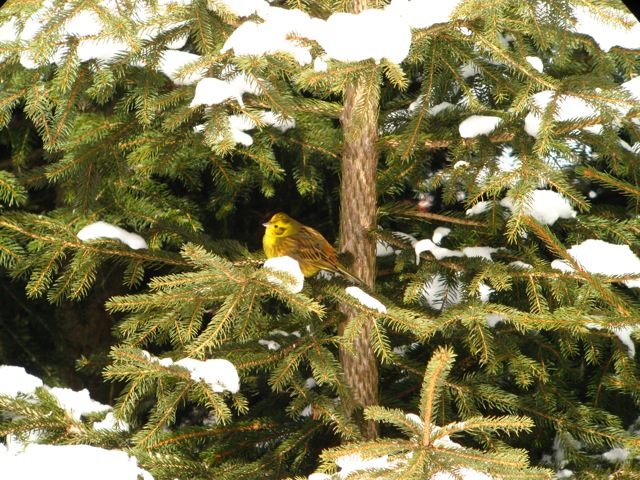
We then headed down to Juifenau, where we finally got good views of Nutcracker, and picked up Willow Tit, Coal Tit, Great Tit, Greenfinch, Nutcracker, Blackbird, and Yellow Hammer, all feeding in a garden on the outskirts of the little village.

Yellow Hammer in Juifenau.

On our way to Ehnbachklamm (the Wallcreeper stake-out), I saw some Chamois on the hillside near Martinswand and so wanted to stop for a couple of minutes so that the others can also see one of the Alps loveliest wild animals.
Fernando had a stern look on his face as he scanned the cliff behind the Chamois.
"The Eagle Owl is over there", he says.
No tonal inflection in voice.
Fixed action pattern reaction from birder. You can guess what it was.
"What?!"
A moment of silence as time bent.
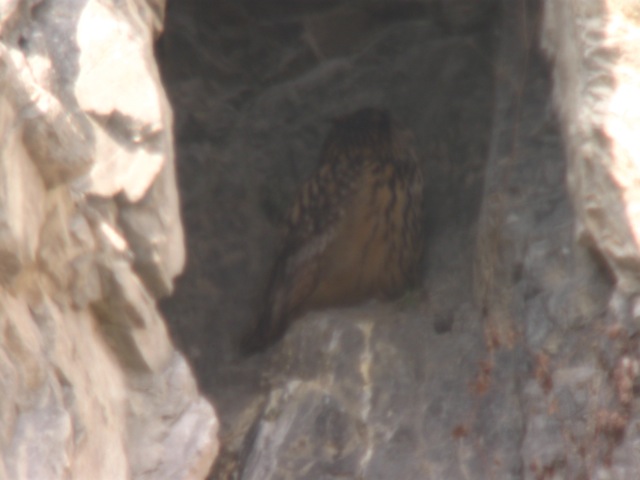
And then, there it was. Sitting in a hole.
That made my day (and that of many others!)

Eagle Owl at 180x magnification

At the Eagle Owl stake-out

Leaving most of the group at Ehnbachklamm, Martin Capper (RSPB, UK) and I quickly dashed in to Innsbruck to get Joanna Kalinowska (OTOP, Poland) to the train station. There, we picked up a good 30 or so Crag Martins feeding over the Inn.

Joining the rest of the group in Ehnbachklamm, who had been searching for Wallcreeper, we learnt that the Wallcreepers were still playing hard to get.

We then headed out on a longer walk, hoping to pick up the shy Three-toed Woodpecker, Black Woodpecker and anything else we could come across. Heading all the way back to Brunntal Alm, we had plenty of time to soak in the peacefulness and beauty of the landscape. Three inches of fresh fluffy snow really gave the woodlands a lovely charm.


In the Brunntal area, Zirl

We ended the afternoon with a breath-taking view over Zirl, and the mountains to the south.

Life in the mountains is hard!

Happy birding
Dale Forbes

Monday, 9 March 2009

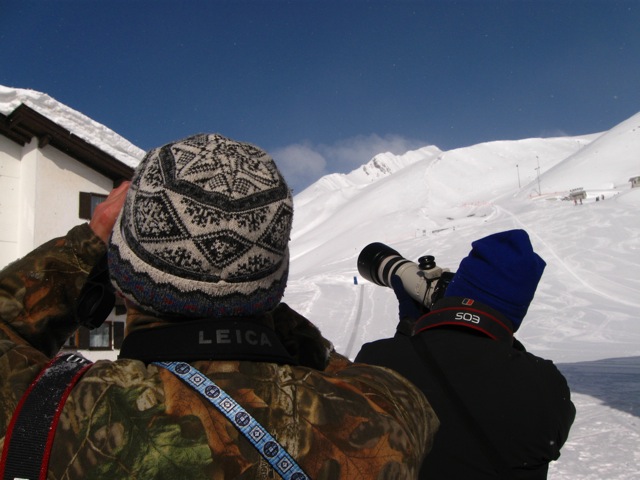
Alpine Accentor - early spring song (Tirol, Austria)

The Alpine Accentors have just returned to the high mountains of Tirol (Austrian Alps) and are really singing beautifully. I found this individual in the ski resort town of Kühtai (Sellraintal), just southwest of Innsbruck in Tirol, Austria. They are normally rather shy and tend to avoid human settlements during spring and summer, but this accentor was having a merry time singing from the terraces of the local hotels.


I took the video with my digiscoping setup (Canon 590IS; Swaro ATS 80HD, 30x eye-piece, DCA digiscoping adaptor) - hence the poor sound quality.

Despite the abundance of snow in the mountains (and even down in Innsbruck last night), it seems that spring is definitely on its way!

Happy birding
Dale Forbes
Tuesday, 3 March 2009

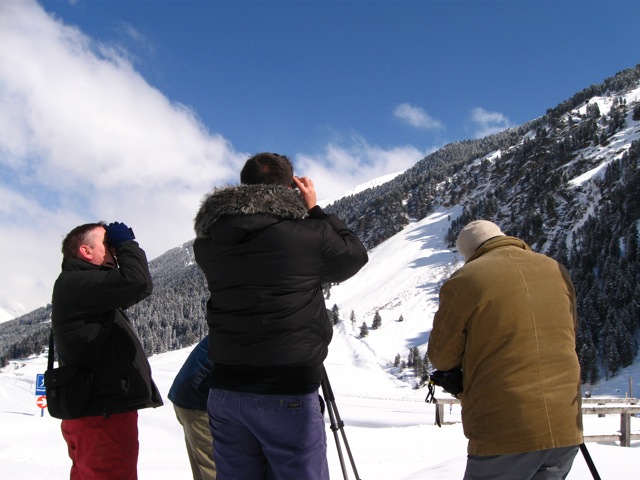
Well, the Alpine Accentors think its spring

I have not seen a single Alpine Accentor (Alpenbraunelle) in the many long months since the snows set in up in the mountains. I have looked for them.
And I have three theories:
  1. They have been super super shy,
  2. Alpine Accentors hibernate under the snow like Marmots, or
  3. Alpine Accentors move to slightly lower altitudes in winter (maybe Südtirol /Alto Adige in Italy).
After a good while with rather rough, stormy, snowy weather, we had a nice warming over the last few days. And as soon as the sun started to come out, the birds flew out in full song. Everywhere you went, there were tits singing, blackbirds chirping and common buzzards screeching.

Heading back up the Sellraintal to Kühtai, I expected to find the regular White-winged Snowfinches.
None.
Not a sausage.
It seems they are only about when the weather is rotten. and the warmer weather and spring feaver got them dashing off in to the mountains to set up their territories (many already have their breeding-colours black bill).

not finding any snowfinches and only a couple of Alpine Choughs early in the morning, I decided to go skiing for a while. The pistes were magical and soft. Off-piste there was a goog 60cm of fluffy soft powder snow. That kept me more than busy for a few hours.

Now that I think of it, I have kept my birder eye in the sky the whole winter, looking for a soaring Golden Eagle and not seen a single one! I wonder what has happened to them? Everything I have read says that Golden Eagles reamin in their territories through winter, but live in expanded home ranges. That means that - given the huge amount of time I spend watching nature and being in the mountains of Tirol - I should have seen at least one poor, cold, half-frozen Golden Eagle in that time. mmm

After playing in the powder snow for a good while, I decided to go for a little walk around the village of Kühtai to see what I could find. The village is actually pretty good year-round for finding high Alpine birds (and quite possibly my favorite alpine birding spot in Tirol).
Nothing.
As I was getting ready to leave, my cell phone rings.
I check my phone, but it is doing nothing.
Still, I hear the ring tone.
(I had, at one stage, an Alpine Accentor song as my ringtone)
So I scan the roof tops and quickly find the culprit.
A lovely singing Alpine Accentor on the roof above me.

If you look really hard, you can see the Alpine Accentor at the apex of the roof.

I had my binoculars with me, and my camera, and tried my hardest to get a couple of digibinning photos of the Alpine Accentor, but it was just too far away to get anything decent. But at least you can see that it is an Alpine Accentor!


This is quite possibly a bird from the group that uses the little clump of trees just west of Kühtai (under the Dreiseenbahn Sesselbahn/chair lift).

Alpine Accentor feeding on some scraps on the ground

So, it seems that the Alpine Accentors are back and singing, and the White-winged Snowfinches are convinced it is almost breeding time - it must be spring!

For other blog entries (and lots more information) on Alpine Accentors, click here.

Happy birding
Dale Forbes
Tuesday, 9 December 2008

Birding in eastern Austria: Neusiedlersee, Lange Lacke and others

Last weekend, on our way back in from Hungary, Martin Riesing took me on a whirlwind tour of Burgenland / eastern Austria's best birding spots. We went in search of hawks and saw tons of Hen Harriers (Circus cyaneus, Kornweihen), an immature White-tailed Eagle (Haliaeetus albicilla, Seeadler), an Imperial Eagle (Aquila heliaca, Östlicher Kaiseradler) and a few Kestrels (Turmfalken) but no sign of the Saker Falcons (Falco cherrug, Sakerfalke).

A quick detour to find Great Bustards (Otis tarda, Großtrappe) produced a healthy flock of individuals flying together - I had never seen anything like it: 18kg birds flying. Sure, I had seen a good number of Kori Bustards (Ardeotis kori) in southern Africa, but they very rarely take to the skies and I had only ever seen them in pairs - never in a whole flock of scores of them!


The climax of the day was spending a few hours bracing against the bitterly cold wind along the shore of Lange Lacke, where we saw thousands of Greylag and White-fronted Geese (Anser anser and Anser albifrons), a good few Bean Geese (Anser fabilis, Saatgans), a couple of Barnacle Geese (Branta leucopsis, Weißwangengans), and - the highlight for me - a single Red-breasted Goose (Branta ruficollis, Rothalsgans) moving about with the White-fronted Geese. We tried our best, but could not find a single Lesser White-fronted Goose (Anser erythropus, Zwerggans).

Birding in eastern Austria is obviously quite different from birding here in the Alpine region of western Austria - and there are certainly lots more species to be seen - but I must admit that by the end of the weekend I was itching to get back to the mountains to see some of our alpine birds again - Alpine Accentors, Snow Finches, Golden Eagles...

Happy birding
Dale

Sunday, 6 July 2008

Diginocking in the mountains

After last weeks' fun taking photos through my ELs, I decided to do a little more of it this morning. Last night we had taken a hike back in to the mountains to a most gorgeous of spot: Solsteinhaus, a hut set way back in the mountains on the edge of my favorite mountain in the whole wide world (Große Solstein - on the right in the first photo).


I was admittedly lazy in getting up this morning, but when I got out there was still something to be seen. The Alpine Accentors were not very vocal at all and we ended up playing an interminable game of hide and go seek. I was not the one hiding. No useful photos there.

But the Ring Ousels were far more obliging. Weary, but far more interested in singing from the "tree" tops to be too worried about me. I don't have the little Snap Shot Adapter anymore - it was borrowed - so these were all taken by just holding my camera to the binoculars. As you can see, I am still learning how to focus effectively.

I also spent some time trying to get some shots of the Crossbills, but they were proving elusive:

catching one taking off was completely by accident:


Here is a habitat shot:
Mostly grassland with some stunted trees (mostly below head hight). Also about were some Grey Wagtails, Wheatears, a couple of ravens and a few other little bits and pieces.

A couple of digibinned insects:

This digibinning thing really is a whole lot of fun. and it means that I can still take bird photos even if my huge digiscoping setup is a home.

Happy birding
Dale

Tuesday, 10 June 2008

Epic birding in the high alps

Last week Andy (Schwarzenberger) and I went on a most epic of bird walks.

Well, maybe that does not completely capture the experience; "bird walk" for me conjures up images of late morning strolls, twenty 50-somethings, compact Nikon binoculars and botanical gardens where chit chatting is somewhat more important than finding birds.

Last week's walk was a far cry from duck ponds and park benches. We left the Kühtai pond (Sellraintal) at 5am and headed up one of the valleys to the South West. Our mission: to do a bird survey up in to the higher Alps. Kühtai itself is at 2020m asl and is one of my favorite ski resorts, but there is almost no snow left in the valley. As we headed up the valley, we found more and more snow. But still, the Great Tits were out and about, as usual, making a lot of noise. But it was the Ring Ousels that got my attention. And there were lots of them about. Nuthatches, Wrens and Bramblings added to the morning chorus.

Near the edge of the tree line, the bird diversity dropped substantially, but there were certainly lots of, taking advantage of the open land and melting snow. Everywhere we turned our ears, the pipits were out calling.


A little way up the path we started to get in to deeper and then deeper snow, and pretty soon there was only snow and boulders to be seen. It was way up here in the snow that we picked up our first Alpine Accentors (Alpenbraunelle) and Wheatears. Chattering away, the wheatears buzzed from boulder to boulder showing off their gorgeous colours - what a sight!

Early on, I tried my hardest to get some good views of the alpine accentors. Little did I know that as we neared the peaks/ridges we would be seeing them up close (but to be honest, at that stage I was more interested in not falling off a cliff or disappearing in an avalanche than studying pretty little birdies). Anyhow, these alpine accentors truly have interesting sex lives. For those of you with a sesquipedalian penchant, their breeding system is called polygynandry, in which about 3-5 males defend a group territory that encompasses 2-3 spatially separated females (cf. Heer 1996 Journal of Ornithology 137/1). Despite a dominance structure, they are highly promiscuous and offspring can be sired by numerous males (three males in Heer 1996!). Individuals feed in very loose associations (or completely independently) and dominant males tend to dedicate more time to feeding than subordinate ones (Janiga & Movotna 2006 Ornis Fennica 83). Not surprisingly, the alpine accentors tend to choose a diet rich in lipids during the winter, presumably for their high energy content (Ibid).

In this higher zone, we also came across Alpine Choughs, Snow Finches, and calling Ptarmigans. The Alpine Marmots also kept us entertained as they ran about through the snow and boulders.

Along the highest ridges, the going was steep, we had no idea where the path was, and were trudging through waist-deep snow. The fog was thick, but we were pretty sure there was a good view from up there. At some stage we decided to throw caution in to the wind and just slide down the snow slope on our bums and try to find the trail again at a lower altitude.


It seems that many high alpine species are adversely affected by ski-pistes; either through disturbance and stress (Arlettaz, Patthey, Baltic, Leu, Schaub, Palme & Jenni-Eiermann 2007 Proceedings of the Royal Society B 274/1614), or the reduction in the quality of open habitats (Rolando, Caprio, Rinaldi & Ellena 2007 Journal of Applied Ecology 44/1). Many of these detrimental effects can be minimized by only skiing on or close to pistes, creating "no skiing" wilderness areas, and by the careful construction of pistes (low-invasiveness, only using heavy equipment where absolutely necessary, and focusing only on the removal of potentially dangerous boulders).